Inflow (IPR)
What the reservoir will give you.
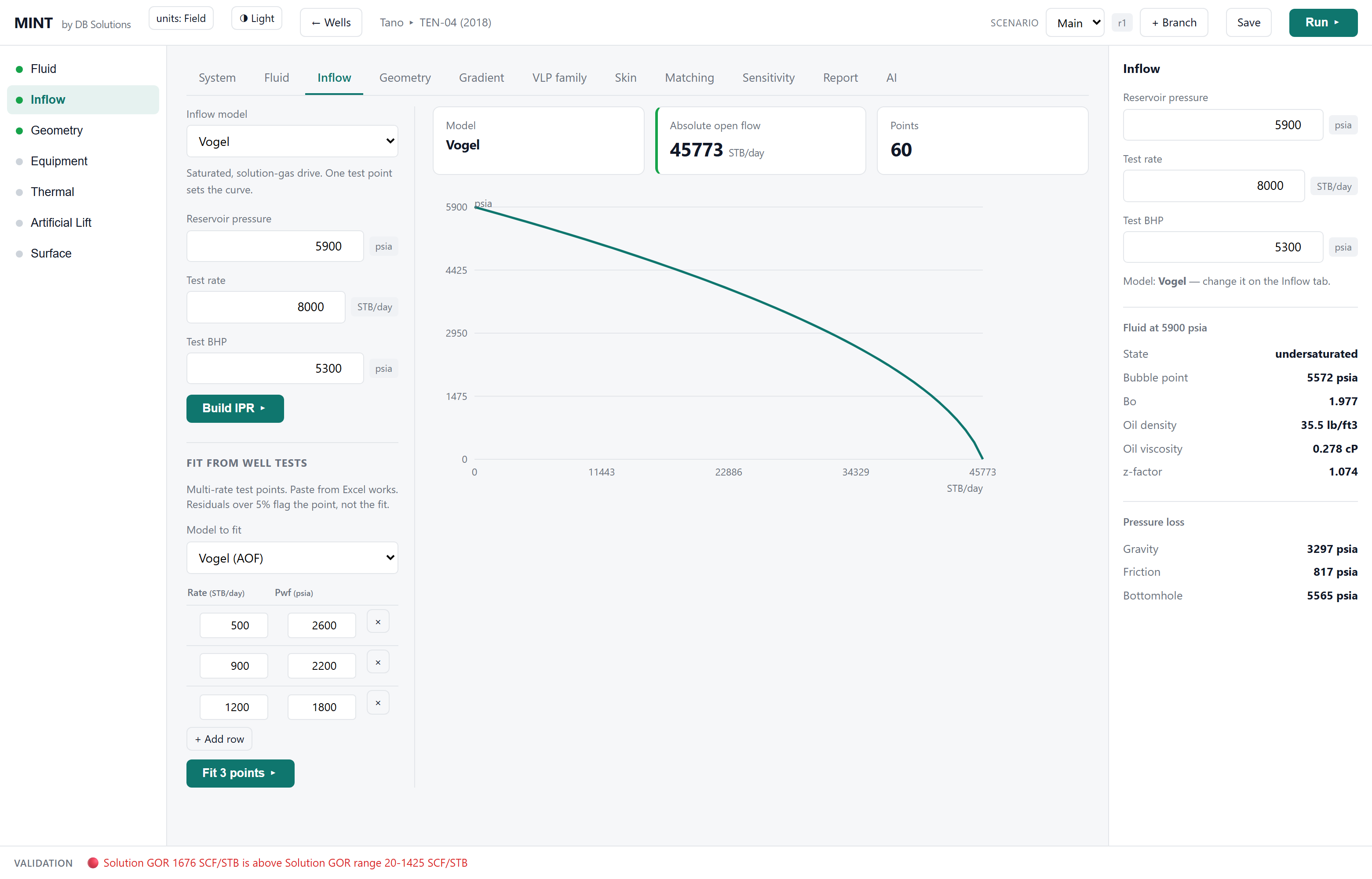
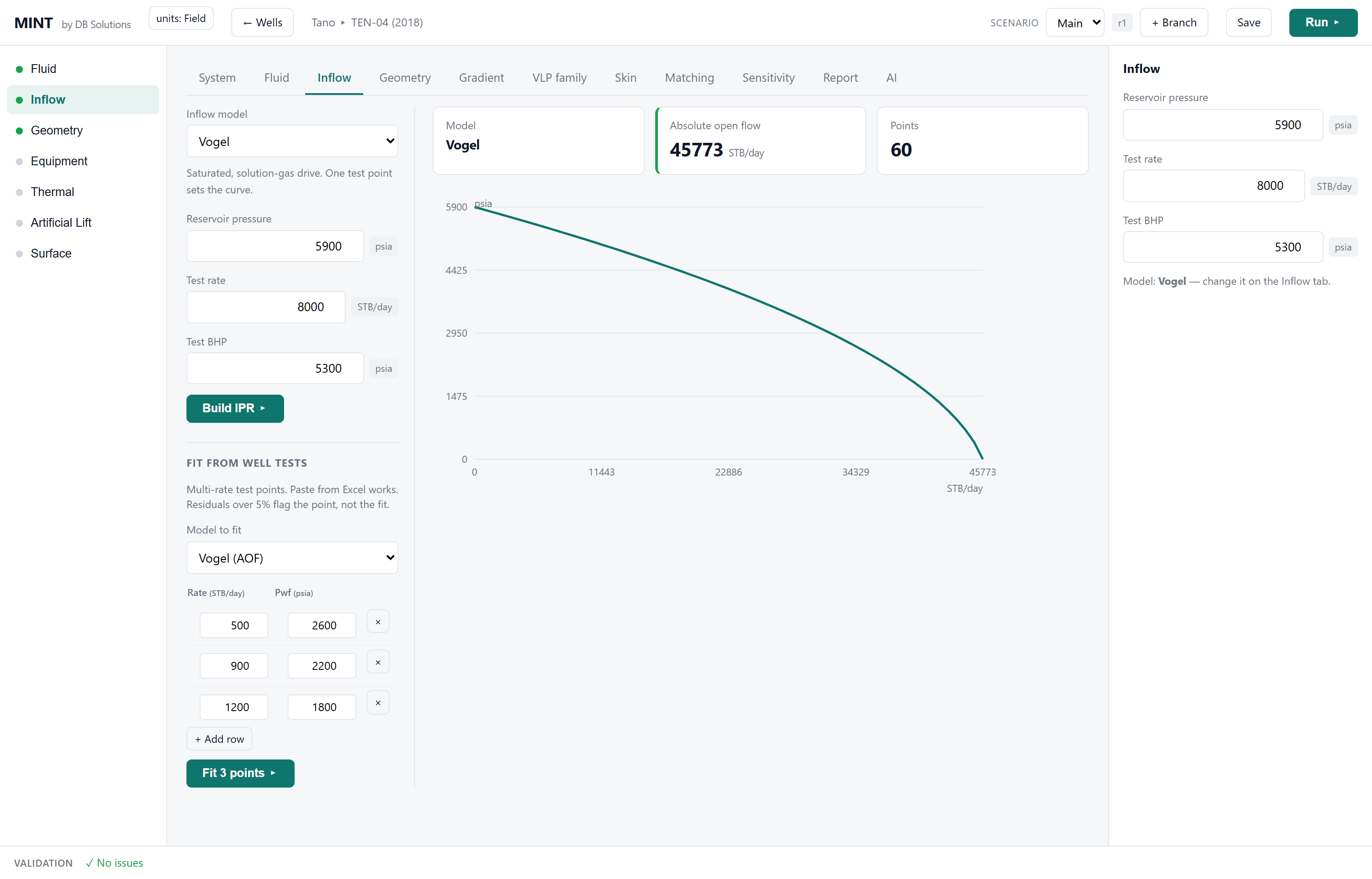
Choosing a model
| If you have | Use |
|---|---|
| a single test point, saturated oil | Vogel |
| a single test point, undersaturated | Composite (Vogel below Pb, straight-line above) |
| multiple test rates | Fetkovich or Jones - MINT fits the coefficients |
| rock and fluid properties, no test | Darcy (PSS or transient) |
| a gas well | Back Pressure, C&n, or Forchheimer |
| a horizontal well | Joshi or Babu-Odeh |
The field table changes with the model - you are only ever asked for inputs the selected model actually uses.
Gas wells: p² vs pseudo-pressure
For gas, MINT offers both. Pseudo-pressure m(p) is the correct one and is the default; p² is a legitimate simplification at low pressure and is kept because that is what many field workflows still use.
Multi-rate fitting
Paste a multi-point test and MINT fits the model to it, showing per-point residuals so you can see which point is dragging the fit. A test point that disagrees with the other three is usually a measurement problem, and you should be able to see that rather than have it averaged in silently.
Skin - by cause, not as one number
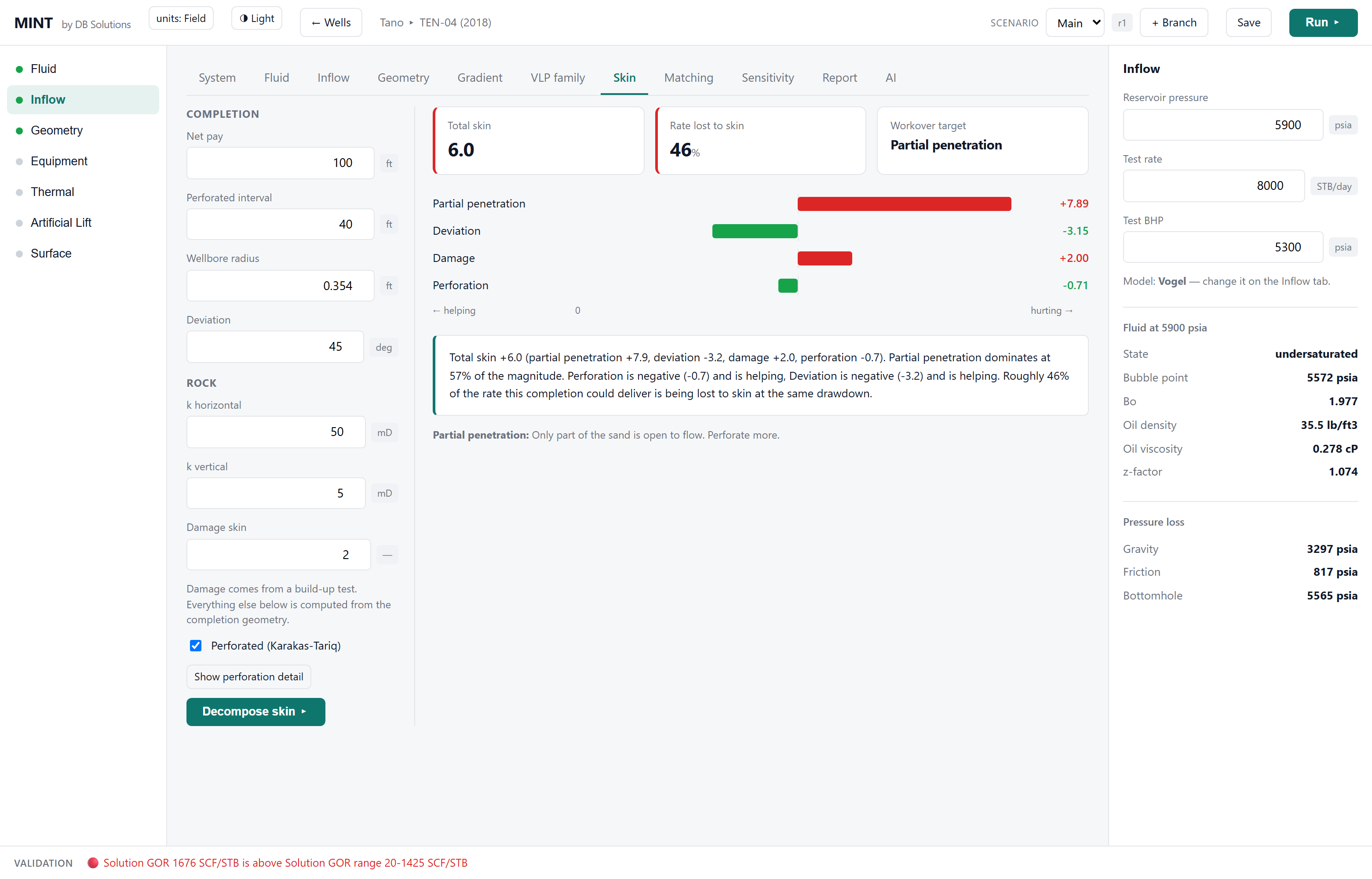
"Your skin is 6" is not actionable. MINT decomposes total skin into named, signed contributions:
- perforation (Karakas-Tariq)
- partial penetration (Brons-Marting)
- deviation (Cinco-Ley)
- gravel pack
- damage
Signed matters: perforation skin can be negative and offset damage. Knowing that your +9 damage is partly masked by −3 of perforation benefit changes what the workover has to achieve.